Showing posts with label garden diary 2011. Show all posts

Monday, October 31, 2011

October Morning

This October morning brings an unusual sight for this time of year, an abundance of snow.
Here the rose garden with the trellis crowned in white while everything else is blanketed in the snow that fell overnight. A strange looking landscape with so many trees still hanging on to their autumn color leaves.

With the early snow comes some interesting patterns in nature with form and color.


The golden yellow of the maple leaves creates a stunning contrast against the fresh white snow and the greys of the distant woodland.


The crab apple that is outside our kitchen window is heavy with fruit, leaves and now snow.


The view from my studio across the field. The oaks with their branches full of russet and burnt orange color leaves the trunks and branches outlined in white by snow.

James was able to get most of the terra cotta pots and garden furniture stored. These remaining benches where on nice evenings, sometimes even in October, we enjoy a glass of wine, can now measure the snow fall amount.
I guess we will be sitting in front of our lovely fireplace in the evening, at least until spring.


Sadly, one of our old apple trees was quite damaged during the storm. This year the tree was in it's glory full of bright red apples and still in leaf. We will get a better look at it in the next few days when the snow begins to melt.

Wednesday, September 28, 2011

and this just in from the garden.........


A trip to the vegetable garden this morning was made to gather nasturtiums for a painting that James is working on. More than nasturtiums made it back to the house.
Plum tomatoes, bell peppers were only part of the mornings harvest.
And the nasturtiums were not forgotten in the bustle of the harvesting.


Beautiful eggplant at last!
These vegetables all bring Italy to mind.
I see cooking in our future.


These past several days of summer weather have been beneficial for the vegetable garden.
Winter squash, carrots, swiss chard, plum tomatoes, so many wonderful ingredients to work with at this time of year. The garden also provides us with flavorful and fragrant herbs for our kitchen.

Figs
What is better than fresh figs in the garden?
Figs are my favorite fruit, at least at the moment.
Now that this bounty is in our kitchen, what shall we do with all these wonderful fruits and vegetables?
The activity in the kitchen has just begun......more on the figs and plum tomatoes coming soon!


Thursday, September 8, 2011

Rose Hips, Scarlet Beauty


The rose hips light up this plant. Their colors span the palette from a pale cadmium yellow into orange to a fully saturated scarlet.


Vermillion or crimson would be the color I would use to identify these rose hips.
Their full round red forms punctuate the leaves which are now shifting from green to yellow.
In spring the new bright green growth of leaves and the small buds form. As days grow longer and warmer the buds open to delicate roses that are so fragrant in the summer sun.
Here in September, with the day light shorter and mornings cooler, this beautiful transformation of the rose notes the nearing of the end of the summer cycle of the garden.
The rose hips carry on the beauty of this plant in the autumn garden.


Monday, July 18, 2011

SUMMER ROSES

Before it is too late it is time to take a walk through the Rose Garden.


This charming fountain, known here as Squirt, was a gift to me from James. She stands in her pool in the center of the rose garden. She always seems to be smiling.


It is difficult to single out favorite roses, but right now I would choose the following three....


Rosa Mundi

This rose is splendid. What color! It is a favorite of bees and a favorite of ours.
It has been the subject of two paintings by James, one of which is in the collection of
The New Britian Museum of American Art, New Britian, CT.


The Apothecary's Rose

This is the rose that started it all.
In our garden it is always a favorite, outstanding in color and fragrance. This rose is the one we dry for small bowls of potpourri for the house.


Great Maiden's Blush

The third rose on my list of this year's favorites is the 'Great Maiden's Blush'. The fragrance of this rose says "rose". It is impossible to walk past shrub rose and not stop to put your nose to it. I always carry a blossom back into the house. Intoxicating!


Roses are just beginning to climb the rose post that James designed and built. We chose a hearty Canadian Explorer Rose 'John Cabot' to climb, with 'Shropshire Lad ' (Austin) at it's base.


Departing the rose garden I walk out through the lavender lined walk. I have been cutting and drying the lavender. The dried lavender and rose petals will be a fragrant and lovely reminder of the garden when the snows of February cover the garden.

Friday, June 17, 2011

IT IS ALL ABOUT THE PEONIES.... Exits and Entrances

The entrance. The blossoms are ahead but this is my favorite time in the peony garden. True, it is about the possibilities of bloom and color that await here, but more it about the beautiful and simple form the peony bush takes on in early June. The young blossoms rolled tight atop their sturdy stems are playful looking with skirts of deep green leaves.

James and I had a neighbor in Maine that we were fond of. This neighbor, Don,
grew only three plants, peonies, lilacs and wisteria, with wondrous results. During June it was not unusual to go out our back door and find a bouquet of peonies filling a bucket!
It was with Don in mind that we planted our peony walk. I too wanted to be able to fill buckets with armfuls of peonies!


Peonies have a long history. Greek mythology gives us the botanical name Paeonia. The story goes that Paeon, a student of the revered god of medicine Asclepius, surpassed his teacher in skill.
The old story. Well, the jealous Asclepius attempted to do away with Paeon but Zeus stepped in turning Paeon into a flower to save him. The flower was the peony. So the story goes.


During the T'ang Dynasty (618-906) peonies commanded such high prices that they were found in the gardens of the Imperial Palace and placed under Imperial protection. The peony was used in Traditional Chinese medicine, believed to have healing properties. (This of course reminds us of the Paeon/ Asclepius myth.) The beauty of this flower captured the attention of Chinese artists and was used an a image in paintings, woodblocks and porcelains.

In 19th century Europe the peony became popularized in gardens and painted by artists such as Renoir and Fantin-Latour, and Pissaro.

And certainly not to be overlooked, here in the 21st Century in the studio right next to mine. James (Aponovich) paints flowers from our garden as they come into bloom. Peonies of course, are being cut and brought into his studio now. There will be more about this later on his blog


As days pass, those round buds unfurl and the peonies begin to show their colors until they are fully open revealing themselves and their intricate petals and centers. Then I wonder, possibly this is my favorite part of their show. The fragrant ones are beguiling.


With the lavender tuning from a blue haze to full flower the garden completes itself for this moment. The two make a lovely couple. For a few days they will share this garden, but soon the robust flowering of the peonies will come to an end . An end
for this season leaving the lavender to take the spotlight.


******************************
A FEW NOTES:
When James & I began collecting peonies we searched out places that featured peonies.
We first looked for heirloom varieties, then added others just because we liked them!
We also sought to have varieties that were early, mid-season and late to extend the season.

We bought several from Countryman Peony Farm in Northfield, VT, where they taught us to buy peonies with "good habit", meaning strong in stem and good form. Here at Countryman we were introduced to 'intersectional' peonies and now have a few of those in our garden. The intersectional peony was developed in the Tokyo in the 1940's by Toi chi Itoh. These colorful plants are a cross betwee a tree peony P.x. suffruticosa with a herbaceous peony.

Uncanoonuc Perennials in Goffstown, NH also provides a nice variety of peonies.


Thursday, June 2, 2011

A Quiet Walk in the Garden


Walking out the front door into this cool and breezy early June morning I am consumed with the fragrance of lilac. It's presence in the garden is commanding. Time stops for the moment. My senses are overcome with the scent of the lilac filling the garden air.

It is time for a quiet walk through the gardens. Walk with me but you promise not to make a sound.
Look, listen and remember to breathe.


The end of the walk .......for today.

Wednesday, May 25, 2011

LILACS


Greek mythology has it that a beautiful nymph by the name of Syringa ( lilac's botanical name), was pursued by Pan, the god of the forest. Pan chased Syringa through the fields and forest. To avoid capture she turned herself into a bush, the fragrant and most beautiful lilac.

Our garden is lush with lilacs. Lavender, magenta, white and blue blossoms create hedges that offer beauty and aroma to walk along on a spring morning. Later , after a day in the studio, a walk ( "passeggiata") through the garden before dinner with a glass of campari & soda, is ever so rewarding.
This is also the time to fill a bucket and cut lilacs for tomorrow. More on that later.


lilac 'Krasavitsa Moskvy'
A white/pink variety that is my favorite this season. I find it especially stunning when used solo in a vase.


" And where are the lilacs?"
Pablo Neruda

The Spanish poet Pablo Neruda was familiar with the lilac and used it symbolically in his writing. A line from a poem written during the Spanish Civil War, asks the question where are the lilacs. The use of lilacs in the phrase often interpreted to point to innocent children that go into hiding in time of war, or noting of the absence of happy times. The lilac representing youthful innocence and humility.


The common lilac ' Syringa vulgaris' is part of the olive family, with it's origins in Europe and Asia. The lilac's popularity and hardiness prompted the early colonists to transport it to the New World. The earliest known lilacs in the USA are in Portsmouth, New Hampshire. These lilacs at the Governor Wentworth Mansion date back to 1750 .


Time to bring lilacs into the house to be a visual treat and add fragrance to fill the room.
Here is what I have found to be the most successful way of cutting lilacs for a vase.
The best time to cut lilacs is early in the morning or at the end of the day. In this arrangement I have featured Wedgewood Blue, Ludwig Spaeth, and President Lincoln lilacs


TIPS ON CUTTING LILACS

First, fill a clean bucket with warm water, then take it with you into the garden along with a sharp pair of pruners. Cut the stem at an angle, remove the lower leaves, and immediately put it into the bucket of warm water. Once the desired amount of lilacs have been cut, place the bucket in a cool, dark place for at least 5 hours, overnight is desirable. Re-cut the stems at an angle before placing them in a water filled vase.


Along with lilacs there are tall late tulips and the viburnum 'opulus' is just starting to flower with it's characteristic chartreuse color. The chartreuse color is a great alone or as a punctuation in an arrangement.
Still ahead in the garden are the later lilacs, 'James Macfarlane', ' Miss Kim', 'Miss Canada' and another favorite and perfume filled meyeri 'Palibin'.

Monday, May 16, 2011

The Over-the-Top Colors of May

Look at the color of this old crabapple tree!

After a long NewEngland winter of white and shades of gray it is such a thrill to see this old crab apple turn to a jewel .
Standing beneath it one is illuminated in crimson, bathed in that glowing crimson.


Trying to mix this color from tubes of paint is just not to be, almost but not quite there.
Nature is good at reminding us that we are mere mortals!
How over- the- top the color of these blossoms are. What joy they offer us!


Once I can leave the lovely old crabapple I walk to the lilac hedge where beauty and fragrance draws me in for a closer look. Lilacs are a favorite here in our garden, this one is President Lincoln. This lilac hedge was planted nine years ago and is quite mature now. This is one of the first to flower each year, with the other following close behind. The lilac is the state flower of New Hampshire, so it is a must-have in our garden. I adore lilacs.

My four favorite fragrances in the garden start with lilac followed by lavender, Apothecary rose and Old Maiden's Blush rose. It is just impossible to walk past any of those flowers without being captured by their fragrance. All, of course, make it into the house to perfume the rooms .


These Rembrandt tulips light up the back garden. They also are cut to become subjects of paintings, or fill vases that bring color into our table.
Tulips punctuate our gardens,there are always Rembrandt tulips, Parrots, Fringed ,and the tall elegant French tulips.
Savour these now for they are all fleeting, but as days pass the late tulips, nepeta, viburnum opulus and an early peony are to be looked forward to as their blooms unfold to delight us!

Sunday, May 1, 2011

PRIMO MAGGIO

Happy May Day!
Daffodils are in bloom at last!

May Day, Primo Giorno (the first day of May), is a national holiday in Italy. The holiday, called Festa Dei Lavoratori is to honor workers and can be compared to Labor Day.
Our first experience with this Italian holiday happened several years back. We were sitting in a bar (cafe) in the small hill town of Panicale. This region of Umbria is quite agrarian.
An area of farms with sheep grazing on fields of grass, hills patterned with olive trees, vineyards, and apple orchards. The land around the nearby Lake Trasimeno is where tiny lentils are grown, that are unique to Umbria.
That morning, sitting with cappuccino to our surprise trucks, large tractors, impossibly tiny utiliatria ( 3-4 wheeled trucks), every type of farm vehicle on wheels began to fill the piazza.
This was quite amazing since Panicale is a walled medieval town with a rather small arched entrance into the piazza. It was delightful to see the farmers in their "Sunday finest" and their farm vehicles polished for this parade!
This was a Festa dei Lavoratori gathering, a workers demonstration with speakers, a poet and more speakers.........essentially "workers are the heart of the community, workers unite!"


For us, May Day is a day to get more serious about the garden. We are happy to see the daffodils proud in full bloom. Lilacs are setting flower buds. Each morning the pale green of new leaves increases on the trees just outside the window.
Some of the seeds that have been started inside come outside to adjust to the still cool air. Peas will get planted, then planted again in another week or two. Greens, spinach, rabe and chard are next on our list of soon to be planted seeds.


A picnic! Deviled eggs with chives topped with smoked paprika. Grilled chicken and a salad of fresh greens. The chives are from our garden and all the other ingredients for our porch picnic are from local farms.

So, our May Day has Italian roots. We begin to plant our garden. We start our picnic with a toast to the farmers who the heart of our communities. Providing good fresh food for our tables is tireless work.
Celebrate the farmer and support local farms!

Happy May Day!

Tuesday, April 12, 2011

gift of tulips!

While I wait for the tulips in our garden, James surprised me with a bouquet of parrot tulips!
We grow parrot tulips, along with Rembrandt and fringed tulips in the garden, not only for their beauty but to cut and paint. Tulips have been a favorite of painters for centuries.
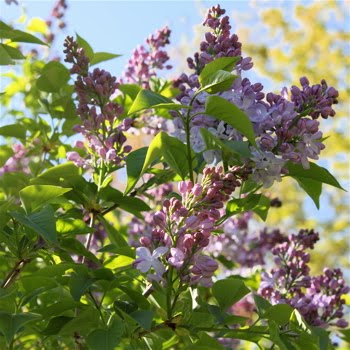
A gift of tulips..............how thoughful and sweet!

Meanwhile, we wait for the tulips in the garden. In the peony walk we plant 'French tulips' also known as single late tulips.
French tulips are tall and elegant. My favorites include, Menton (pictured above), Dordogne and Maureen.

Once the tulips just begin to show color and flower heads are ready to open I will head out to the garden with a bucket of cool water and some sheets newspaper or newsprint . After cutting the tulip I immediately put the stem into water. Once I have 8-10 stems cut I wrap the bunch of tulips in the paper, fairly snug, then quickly return them to water. I will put the tulip filled bucket in a cool place, out of sunlight, for several hours ( or overnight). Unwrap tulips, re-cut stems , and arrange in a vase. Did you know that tulip stems continue to grow for 24 hours after being cut!!

It will be some time before the tulips in the garden are flowering,
but the daffodils will soon be showing their color!
Can't wait!

(never combine tulips & daffodils , or anything from the narcissus genus, together in a vase)


Thursday, April 7, 2011

A ROMANTIC NOTION: the Pansy

Yesterday, James and I drove past a garden center where carts of pansies were outside in full view. Arriving home, I found my email included the announcement of The Mixed Border garden center opening in less than two weeks.
Gardening season is here!
I did stop at that roadside garden center to buy some enchanting pansies and violas. Who could resist??
Later,I became curious about these lovely little pleasures, so I did a bit of reading.

The pansy, as we know it, has been popular since the mid 1800's. Claims to its origins vary.
The pansy is derived from the viola, viola x wittrockiana and viola tricolor hortensis.

Lady Mary Bennet of England is said to have introduced the pansy in 1812. Her garden planted with every variety. It must have been a breathtaking sight! Meanwhile, at the English estate of Lord Gambler, it is claimed that the gardener, Thompson, began work with the viola tricolor species to achieve the pansy .
So the origins of the pansy seem to belong to 19th Century England.

Ophelia, in Shakespeare's Hamlet,
" There is rosemary, that's for remembrance: pray you, love,remember. And there is pansy, that is for thoughts."


Shakespeare wrote of the pansy as did Nathaniel Hawthorne and D.H. Lawrence.
Georgia O'Keefe painted the pansy, more than once.


Some say that you can see a loved one in the face of a pansy.
I find that such a romantic notion.

Sunday, March 20, 2011

PRIMAVERA

According to our calendar today, March 20 is the first day of spring.
During the past few weeks it has been routine for me to go to the window looking to see if the witch hazel has blossomed . Everyday looking, hoping for the first hint of a yellow flower emerging on a branch.
Waiting, waiting, waiting and watching.

Finally today , Primavera, , this first day of spring the flowers appeared!
We planted this witch hazel (Hamamelis x intermedia), 'arnold promise', for two very good reasons. The first very good reason is that is such an early bloomer here in NH. The other reason we chose this particular variety is that it was developed at the Arnold Arboretum.

Near to the witch hazel are these two Adirondack chairs that we purchased many years ago from a workshop in Brooklin, Maine. Much of the winter they were buried in deep snow. Over the winter after each storm we watched them as a measure of snow depths. Now they become a measure of snow melt! They have at last freed themselves from the winter.
WELCOME SPRING!!!!

**************


The Arnold Arboretum of Harvard University
is the oldest public arboretum in North America
For further information go to their website: